
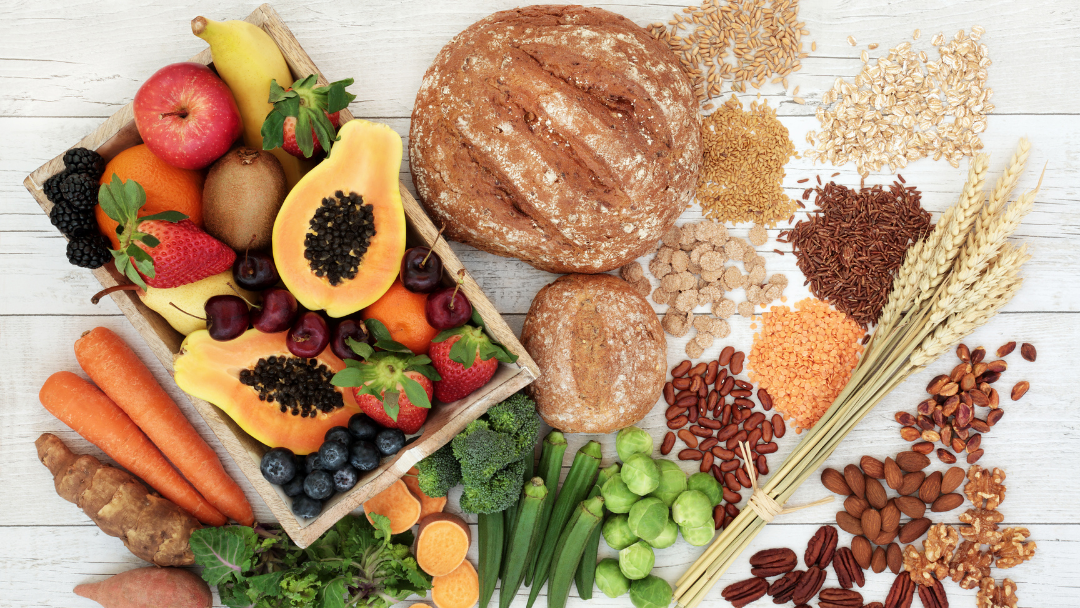
Photo: Marilyn Barbone/Shutterstock.com
Fiber plays important roles in our eating and health. However, all fiber is not created equally. You may have heard the terms soluble and insoluble fiber previously, but did you realize that the ability of some soluble fibers to form gel-like substances provides health benefits?
Fiber Facts
Fiber originates in plants and is a nondigestible carbohydrate and can be soluble or insoluble. The type of fiber indicates what properties it has and how it impacts physiology. The source of fiber can be dietary or a functional source that is manufactured, such as in a supplement. This article outlines some common misconceptions of fiber.
Soluble fiber blends with water or other liquids. It may or may not completely dissolve in a liquid. If it completely dissolves, it is referred to as non-viscous. If it forms a gel-like substance when placed or stirred in a liquid, it is categorized as viscous.
Insoluble fiber does not blend with liquids. It remains mostly intact as it passes through the gastrointestinal tract. Roughage is a common label given to insoluble fiber.
Benefits of Fiber
According to the U.S. Department of Agriculture (USDA) Dietary Guidelines 2020-2025, adult females should consume 22 to 28 grams of fiber daily and adult males 28 to 34 grams of fiber daily, depending on age, with younger adults requiring the higher amount. However, “more than 90 percent of women and 97 percent of men do not meet recommended intakes of dietary fiber.” According to the report, low fiber intake is linked to “low consumption of fruits, vegetables, and whole grains.”
Low fiber intake may be associated with inflammatory bowel disease, lighter sleep and increased sleep arousals, increased cancer risk, and constipation. Fiber consumption below USDA recommendations is noted as a “public health concern.”
A healthy intake of dietary fiber is associated with digestive health, healthy weight or weight loss, and lower risk for a variety of chronic diseases, such as heart disease, hypertension, Type 2 diabetes, and obesity, among others.
Regarding digestive health, gel-forming soluble fiber helps to normalize stool formation and relieve constipation. Researchers compared a gel-forming soluble psyllium husk supplement to coarsely-ground wheat bran on stool output and water content in subjects with chronic idiopathic constipation and concluded that psyllium husk showed more significant results in relieving constipation. In addition, psyllium husk can be utilized as a treatment for IBS. Gel-forming soluble fiber, specifically psyllium husk, can also help lower cholesterol, and when taken with meals, can assist in managing blood glucose levels.
Tips for Increasing Fiber Consumption
A practical step to increasing daily fiber intake includes increasing dietary fiber of whole, plant-based foods, such as vegetables, fruits, and whole grains. Minimize or avoid refined, processed foods. For instance, choose brown rice over white rice (per 1 cup, brown rice contains 3.5 grams versus 1.0 gram for white rice). And, eat the food intact, when possible. Eating a medium-size apple with its skin provides more fiber than eating ½ cup of applesauce (3.7 grams compared to 2.0 grams, respectively).
Eating vegetable soup, preferably homemade, is one method to increase vegetable intake and thus fiber intake. Adding legumes or pulses will up the fiber content of the soup.
Add foods rich in fiber to your existing recipes to increase their fiber content. Chia seeds are an excellent source of fiber, with 34 grams of fiber per 100 grams of seeds, and are a viscous form of soluble fiber. Flaxseed is also a solid choice as a high-fiber food, containing 27 grams of fiber per 100 grams of flax. Whole flaxseed is insoluble; whereas, ground flaxseed is soluble and gel-forming. Chia seeds and flaxseed can be added to smoothies, yogurt, oatmeal, and baked goods.
Consider rotating high-fiber foods into your meals or as snacks.
| Food | Fiber content | ||||
| 1 cup chickpeas | 10.6 grams | ||||
| 1 avocado | 10.0 grams | ||||
| 1 cup raspberries | 8.4 grams | ||||
| 1 cup Brussel sprouts | 6.4 grams | ||||
| 1 medium baked potato | 5.0 grams | ||||
| 1 cup peas | 4.3 grams | ||||
| 1 medium pear | 4.0 grams | ||||
| 1 cup blueberries | 4.0 grams | ||||
| 1 medium orange | 3.0 grams |
Decrease meat consumption and replace with legumes or pulses to increase the meal’s fiber content.
When shopping for prepackaged whole grains, bread, or cereals, read the nutrition label to help you choose a product with higher fiber. Experiment with different grains to add variety to your meals.
Fiber intake can be increased through dietary means or supplements, called functional fiber. While supplements do not provide the same nutritional benefits as whole foods, they can help narrow the “fiber gap” in most diets. Psyllium husk is a soluble, gel-forming functional fiber and can be consumed mixed in water or other beverages and added to smoothies, oatmeal or other breakfast cereal, or baked goods.
If you are trying to increase your daily fiber intake, start slowly as adding too much fiber too quickly may result in gastric discomfort. Researchers recommend adding up to 5 grams a day per week. When adding fiber to your meals and snacks, drink plenty of water. Keeping a food journal can help you track your fiber intake.
If you have questions about your fiber intake, whether through foods or supplements, talk with your doctor, nutritionist, or other healthcare practitioner regarding your dietary needs.