
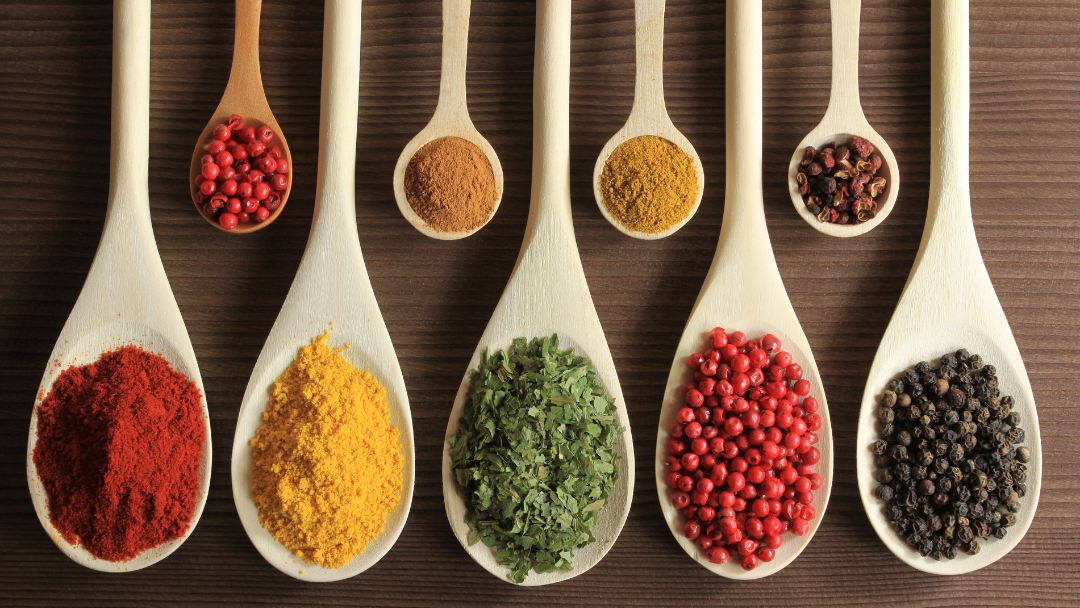
Photo: Krzystof Slusarczyk/Shutterstock.com
Black pepper (Piper nigrum), a widely used spice, is referred to as the “King of spices.” Peppercorns are the fruit of pepper plants, which are grown in places like Indonesia, India, and Brazil. The main phytochemical in black pepper is an alkaloid called piperine, and it has a wide range of biological effects including antioxidant, antihypertensive, hepatoprotective, antidepressant, immunomodulatory, and anti-asthmatic, among many others. Piperine also inhibits enzymes involved in metabolism and, as a result, can increase the bioavailability of drugs, vaccines, and nutrients. An example of this action is the ability of black pepper to increase curcumin bioavailability by inhibiting its rapid detoxification.
In Traditional Chinese medicine, black pepper is known for its pungency and is considered hot and warming. Black pepper is also common in Indian cooking, and in Ayurveda, it is used as a medicinal plant. Trikatu is an Ayurvedic formulation of black pepper, ginger, and long pepper that is used for a variety of health conditions. In recent years, trikatu has been researched for its effects on conditions like liver disease, COVID-19, and rheumatoid arthritis.
Notably, piperine is found in the fruit of other pepper plants, including long pepper (Piper longum) and West African black pepper (Piper guineense). In terms of fruit, Piper nigrum contains a high concentration of piperine (1.7 – 7.4%), though the spikes and roots of Piper longum also contains high concentrations (5 – 9%). While the spikes and roots are used for medicinal purposes, it is the peppercorns that have culinary use and are found in most kitchens. Other alkaloids in black pepper include pipericine, piperanine, piperolein, piperylin, and piperettine.
Health Benefits of Black Pepper
Chemopreventative Activities. Black pepper has been researched in cells for its effects on a number of cancers, including breast, prostate, lung, colon, liver, oral, and ovarian cancers, through a variety of mechanisms including inhibiting proliferation and inducing apoptosis (cell death). At low doses, piperine has antioxidant effects; however, high doses can create reactive oxygen species in cancer cells, which may explain its ability to induce apoptosis. Additionally, piperine may inhibit the PI3K/Akt/mTOR signaling pathway, therefore inducing apoptosis and autophagy, as shown in human oral cancer cells. Piperine may reduce matrix metalloproteinase (MMP) expression, which can inhibit cancer cell migration, and inhibit angiogenesis, an important rate-limiting step in tumor growth that supplies blood to the tumor. Finally, piperine can enhance the anticancer effects of curcumin by increasing bioavailability, and it may reverse multidrug resistance in cancer treatment.
In breast cancer cells, piperine may downregulate human epidermal growth factor receptor 2 (HER2) gene expression, which can promote metastatic potential. Piperine may also sensitize estrogen-positive breast cancer cells to radiation and enhance cell death.
Piperine may benefit liver cancer. A 2023 pilot study examined the combined effects of piperine, curcumin, and taurine – administered for three months – on hepatocellular carcinoma in patients who were unsuccessful with other treatments. Results showed that piperine, curcumin, and taurine could improve the anti-tumor immune response in hepatocellular carcinoma patients by increasing various markers, including immunological markers CD4 and CD8, which can contribute to tumor regression.
Cardiovascular Health. While much of the research on black pepper uses extracts and supplemental doses, culinary doses of spices have health benefits, too. One study looked at the effects of a high antioxidant spice blend, including black pepper, on triglycerides, glucose, and insulin following a high-fat meal in states of both rest and psychological stress. The study involved 20 men and women (ages 30- 65 years) who were overweight or obese but otherwise healthy. Results showed that consuming a blend of spices in a high fat meal improved postprandial triglycerides in a state of rest and may inhibit enzymes involved in lipid digestion. However, this result was not seen when under psychological stress, implying that both culinary spices and lifestyle interventions, such as stress reduction, could be helpful in supporting cardiovascular health.
Another study showed that mixed herbs and spices, including black pepper, in a relatively high culinary dose (6.6 g per day as part of a 2100 kcal diet for four weeks) may improve 24-hour ambulatory blood pressure in adults – especially women – at risk for cardiometabolic diseases. Additionally, adding black pepper and other spices like oregano and rosemary to meat before cooking may reduce lipid-peroxidation products, which can contribute to atherosclerosis and carcinogenesis.
Liver Health. Black pepper may protect the liver against insecticide exposure. Cypermethrin is a commonly used commercial and residential insecticide. Though cypermethrin is less toxic compared to other insecticides, it may induce oxidative stress in the liver, has been linked to hepato-renal dysfunction and testicular cancer, and is able to pass the blood-brain barrier, where it may have neurotoxic effects. In a 2023 animal model, cypermethrin treatment increased liver enzymes and malondialdehyde, decreased antioxidant enzyme activity and glutathione, increased cytokines, and damaged DNA. However, co-treatment with nano-piperine reversed the negative effects of cypermethrin and protected against liver damage, possibly by slowing lipid peroxidation and reducing cell damage as well as enhancing membrane permeability and glutathione absorption.
Another animal study examined the effect of piperine in mice with hepatic steatosis – or fatty liver – resulting from a high-fat diet. Results showed that piperine increased adiponectin and reversed insulin resistance and hepatic steatosis. Importantly, hepatic steatosis can contribute to metabolic dysfunction and progress into fibrosis and cirrhosis.
Neurological and Mental Health. Black pepper has been researched for its therapeutic potential on disorders such as Alzheimer’s disease, Parkinson’s disease, Huntington’s disease, multiple sclerosis, ischemic stroke, epilepsy, anxiety, and depression. A notable feature of piperine is its ability to cross the blood-brain barrier. The brain also shows efficient uptake of piperine, which is possibly a result of its low clearance in the liver and ease of brain tissue penetration.
Piperine is an inhibitor of the monoamine oxidase enzyme (MAO), which causes the breakdown of the monoamine neurotransmitters serotonin, dopamine, and adrenaline and plays a role in neurodegeneration. Increased MAO-B activity is associated with Alzheimer’s disease, and inhibiting this enzyme may slow disease progression by reducing the accumulation of neurotoxic byproducts produced through MAO activity, such as ammonia, hydrogen peroxide, and aldehydes.
A 2023 study investigated the effects of black pepper extract on hydrogen peroxide-induced oxidative stress in human neuronal cells. Hydrogen peroxide can cause neuroinflammation, amyloid beta aggregation, and neuronal death. Results showed that black pepper extract reduced reactive oxygen species production, protecting cells from oxidative damage. Black pepper also inhibited anti-acetylcholine esterase activity, which can help maintain acetylcholine levels for cholinergic transmission, and amyloid beta fibrilization. Lastly, black pepper was shown to have an anti-glycation effect, possibly by forming a complex with albumin.
How to Use Black Pepper
Black pepper can be found in whole and ground forms. Just like black peppercorns, white peppercorns are from the Piper nigrum plant but are fully ripe and have the outer pericarp removed before drying. Compared to the sharp and intense flavor of black pepper, white pepper has a milder taste. Black pepper may have better antioxidant activity compared to white pepper. And although pink peppercorns exist, they’re part of the cashew family.
Below are some potential ways to incorporate black pepper into your diet:
- Add peppercorns to turmeric tea and golden milk
- Use ground pepper in salad dressings
- Sprinkle ground pepper on vegetables
- Season soups and stews with ground pepper after cooking
- Incorporate pepper in marinades and recipes using ground meat
- Include whole peppercorns in homemade pickle recipes
- Simmer whole peppercorns in homemade broth (remove before consuming)
- Infuse black peppercorns in tea to enhance digestion
The ability of piperine to withstand heat has conflicting evidence, but it’s suggested that piperine may be sensitive to heat processing, especially pressure cooking. It may be best to add black pepper at the end of cooking, when possible, to minimize heat exposure. Additionally, it may be best to avoid storing black pepper for more than 6 months as piperine content decreases during storage. Because black pepper is produced in tropical environments, it may be more prone to contamination from mycotoxins. As with all spices, portion black pepper to a separate container before using over steaming dishes to reduce moisture introduced to the product. If ground pepper becomes clumped or caked, it should be replaced as moisture has likely been introduced to the product and can contribute to harmful mycotoxins. Store black pepper in a cool and dark place, and choose glass jars rather than plastic as these are a non-toxic alternative and more airtight compared to plastic.
Safety Concerns
Nightshades. Despite the name, black pepper is not an actual pepper, as one would find in the nightshade, or Solanaceae family. Therefore, this spice can be consumed by individuals sensitive to nightshades, unless there is an outright allergy to black pepper, of course.
Oral Allergy Syndrome. Black pepper may cross-react with ragweed pollen allergens, and those who are allergic to ragweed may experience allergic symptoms like an itchy mouth after eating black pepper.
Oxalates. Black pepper contains some oxalates. However, the amounts are much lower compared to other spices, like turmeric. For example, black pepper contains approximately 5% soluble oxalates while turmeric contains 91% soluble oxalates. Additionally, for reference, one would need to consume more than 150 teaspoons or 50 tablespoons of ground black pepper to reach the amount of oxalates in 100 g (approximately 3 cups) of raw spinach. Therefore, culinary doses of black pepper are unlikely to pose a problem, though those avoiding oxalates may choose to forego black pepper.
Drug Interactions. Black pepper extracts and isolated piperine may interact with medications, such as antihistamines, cancer treatment drugs, and warfarin. Those taking medications should speak with their healthcare provider about the health risks associated with supplemental forms of black pepper when taking medications.
Final Words
If you have questions about which herbs, spices, or foods can best support your health, talk to your doctor, nutritionist, dietician, or another healthcare team member for personal options based on your circumstances. Note that black pepper can affect the metabolism of medications, so consult your pharmacist if taking any prescription drugs.