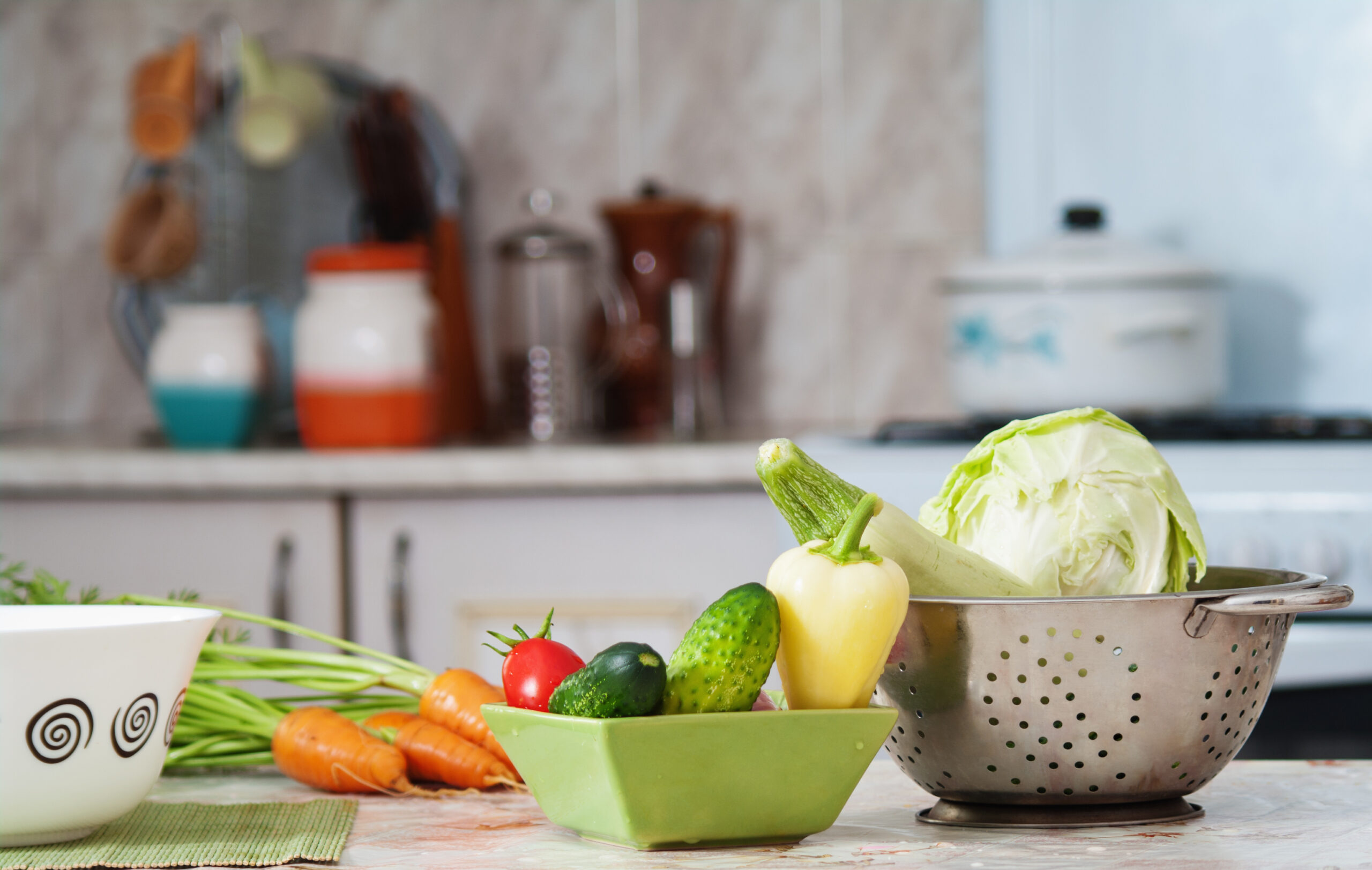

Photo: Bondar Illia/Shutterstock.com
Broccoli, kale, and other members of the cruciferous vegetable family frequently get placed in the superfood category, but if you look a little closer, you may find some people suggest we avoid these foods. The reason? Compounds known as goitrogens.
Are they so harmful you should avoid these healthy, green foods? Let’s see what the literature has to say.
What Are Goitrogens
Before we dive too deeply into the science, let’s first make sure we are on the same page. Goitrogens are agents that interfere with thyroid function and thus increase the risk of developing a goiter, hence their name. These compounds can be found in medications, environmental toxins, and food. For this blog, I am concentrating on dietary sources of goitrogens rather than other potential sources.
Glucosinolates are dietary goitrogens found in the brassica family (e.g., kale, broccoli, Brussels sprouts, cabbage) as well as other plant foods. Although some of these glucosinates have health-promoting effects (such as glucoraphanin and its byproduct sulforaphane), many of these plants also have the glucosinolate progoitrin, which degrades into goitrin with the potential to inhibit the thyroid’s utilization of iodine. Thiocyanate, the degradation of another glucosinolate indole, can also reduce iodine uptake.
Although cruciferous vegetables are often lumped together into one group, the levels of these potentially goitrogenic compounds differ among the brassica family. According to one study, kale and Brussels sprouts had the highest amount of indole glucosinolate with a range of 392 umol/100 grams to 840 umol/100 g, and different species of kale had different levels. There was a similar variety among progoitrin and other compounds.
Glucosinolates are not the only goitrogenic compounds found in plant foods. Resveratrol, isoflavones (e.g., genistein and daidzein), and flavonoids may also have goitrogenic effects. Flavonoids may impact thyroid health in several ways, such as inhibiting thyroperoxidase activity, decreasing iodine uptake, and impacting the ability of thyroid hormones to target tissues. Millet also contains goitrogenic compounds (C-glycosyflavones) shown to inhibit TPO activity.
Goitrogens can be decreased through cooking and fermenting. But is it necessary to avoid raw broccoli for your thyroid health? Let’s see.
What’s the Evidence for Avoiding Goitrogens?
As you will see, most of the research surrounding potentially harmful effects of goitrogens revolves around thyroid health. However, they could impact other areas of health since thyroid health can affect other systems. Poor thyroid function is associated with other health conditions, including poor cognitive function, heart disease, and developmental delays.
Studies Showing a Negative Impact on Thyroid Health:
Let’s first take a look at the evidence against goitrogens. In one cell study, 25 mg of goitrin decreased the amount of iodine uptake, while 10 mg did not impact uptake. One in vitro study found that flavonoids inhibited type 1 deiodinase activity, and the researchers postulated that long-term consumption of flavonoids may impact thyroid function.
A mouse study found that green tea extract, which is rich in the flavonoids catechins, led to a decrease in the activity of thyroid peroxidase and 5’-deiodinase 1 as well as increased TSH levels and reduced T3 and T4 levels, demonstrating the potential for compromising thyroid function.
A study on children who did not have thyroid disease found a small but significant positive association between actual phytoestrogen levels (genistein and daidzein, both isoflavones from soy) and increased thyroglobulin autoantibodies and decreased thyroid volume.
In one study from 1990 on the prevalence of autoimmune thyroid disease in children who were fed soy formula, there was a significantly higher prevalence in those who did have soy formula compared to breastfed children (31% compared to 12% of siblings who were not fed soy formula and 13% in the control group).
A combination of goitrogens, whether from dietary or other sources, may have a greater impact than one alone. One study on pregnant women found that while on their own perchlorate, nitrate, and thiocyanate did not have a significant impact on thyroid health, the combination of all three did.
The Relationship Between Goitrogens and Iodine
The reason goitrogens impact thyroid health so much is largely due to the relationship of these compounds on iodine uptake and use. Iodine is vital for thyroid health, and iodine deficiency can lead to goiter development, hyperthyroidism, and hypothyroidism. It is important to note that excessive iodine can also negatively impact thyroid function and health.
As such, many of the studies demonstrating a potentially detrimental impact on thyroid health are in populations with a pre-existing iodine deficiency. In the US, there is not a widespread iodine deficiency, although some populations may still be at risk.
In a rat study, consuming iodine-deficient food with an addition of thiocyanate led to a reduction of T4. It also impacted the brain by lowering certain protein and nucleic acids as well as creating an increase of type II 5’-deiodinase to impact T3 in the brain. In another rat study, healthy rats consuming rutabaga sprouts, which are rich in glucosinolates, had no negative health effects, including on their thyroid. However, those who had hypothyroidism experienced an enhanced impact of iodine deficiency.
In another rat study, consumption of moderate levels of iodine in conjunction with a goitrogen (either 25 mg of thiocyanate in one group and cabbage in another) did not mitigate the goitrogenic effects, although there was some protection in the group that was fed higher levels of iodine.
In one study on Ethiopian children, of which 58.8% were considered to have an iodine deficiency based on urinary iodine levels, there was an association with consuming goitrogenic foods (especially taro root, cabbage, Abyssinian cabbage, and banana) and having lower urinary iodine levels, as did consuming lower levels of iodine in the diet.
In a study on pregnant women, only the subgroup of women with low iodine urinary levels had an association with higher levels of TSH with thiocyanate, although another study found that in mildly iodine-deficient pregnant women, there was no association with low-level thiocyanate exposure and thyroid function.
One study in New Caledonia found that women who had a low intake of iodine did have an increased risk of thyroid cancer with a higher consumption of cruciferous vegetables (with an OR of 1.86), and a study on a Polish population also found a 1.5-fold increase in the incidence of thyroid cancer in those who consumed cruciferous vegetables. Furthermore, the group with thyroid cancer tended to consume cruciferous vegetables more frequently than healthy controls.
Studies Showing No Impact or Positive Impact:
While there are several studies, especially animal and mechanistic studies, demonstrating the potentially harmful effects of dietary goitrogens, many human studies show no correlation, and some show a beneficial effect.
In one randomized, double-blind, placebo-controlled trial that spanned three years, taking genistein (an isoflavone considered a potential goitrogen) at a dose of 54 mg/day did not have any impact on thyroid function or health.
One review study on soy isoflavones’ impact on thyroid health found little to no impact on thyroid health or function. However, those taking thyroid medication may need to increase their dose if they are consuming soy foods due to inhibition of the absorption.
One randomized-controlled trial found that consuming a broccoli sprout beverage to activate Nrf2 signaling by sulforaphane (as a way to fight oxidative stress) did not impact free T4, TSH levels, thyroglobulin levels, nor thyroid autoimmunity status. These beverages were enriched with sulforaphane and its precursor glucoraphanin.
In a study on vegetarians and vegans living in Boston, vegans did have slightly higher urinary levels of thiocyanate and lower iodine levels than vegetarians, but there was no association between these or iodine levels with thyroid function, based on TSH and T4 levels.
Goitrogenic foods may be protective against thyroid cancer. In one case-control study in French Polynesia, which has a very high incidence rate of thyroid cancer, consuming a traditional Polynesian diet was inversely associated with thyroid cancer. Similar to cabbage, cassava, which is considered a goitrogenic food, was also found to be protective. A case-control study found that urinary levels of thiocyanate had an inverse association with papillary thyroid cancer, with an odds ratio of 0.24, pointing to a potential protective effect.
However, one pooled analysis of case-control studies found no association between intake of cruciferous vegetables and thyroid cancer, as did a case-control study in Kuwait. A meta-analysis found an odds ratio of 0.93 for thyroid cancer for those consuming cruciferous vegetables, which was not significant, and another systematic review found no consistent association between thyroid cancer and consumption of cruciferous vegetables.
In a study looking at breast cancer risk in a Chinese population (rather than thyroid health), consuming foods rich in glucosinolates and isothiocyanates (specifically cruciferous vegetables) led to a reduced risk of breast cancer. Those in the highest quartile for cruciferous vegetables compared to the lowest had an odds ratio of 0.51 and for GSL and ITC were 0.54 and 0.62, respectively.
What’s the takeaway? These studies show mostly neutral effects of goitrogenic foods, although there remain some conflicting results. The biggest difference may be in the iodine status of the population.
Should I Eat Goitrogenic Foods?
So, do you have to give up on the potential health benefits of cruciferous vegetables and other plant-based foods that contain these potentially goitrogenic compounds? Based on the evidence, the answer is no—at least for most people. Consuming these foods as part of a varied, colorful, plant-based diet most likely will not cause a problem in healthy individuals.
For those concerned, cooking and fermenting reduces the levels of goitrogenic compounds. Additionally, adequate iodine levels may also reduce the impact of these compounds on thyroid health.
However, those with thyroid problems or a higher risk of thyroid problems due to family history or other risk factors (such as iodine deficiency) should discuss with their doctor, nutritionist, or other health professional on their care team whether consuming these foods may pose a risk.