
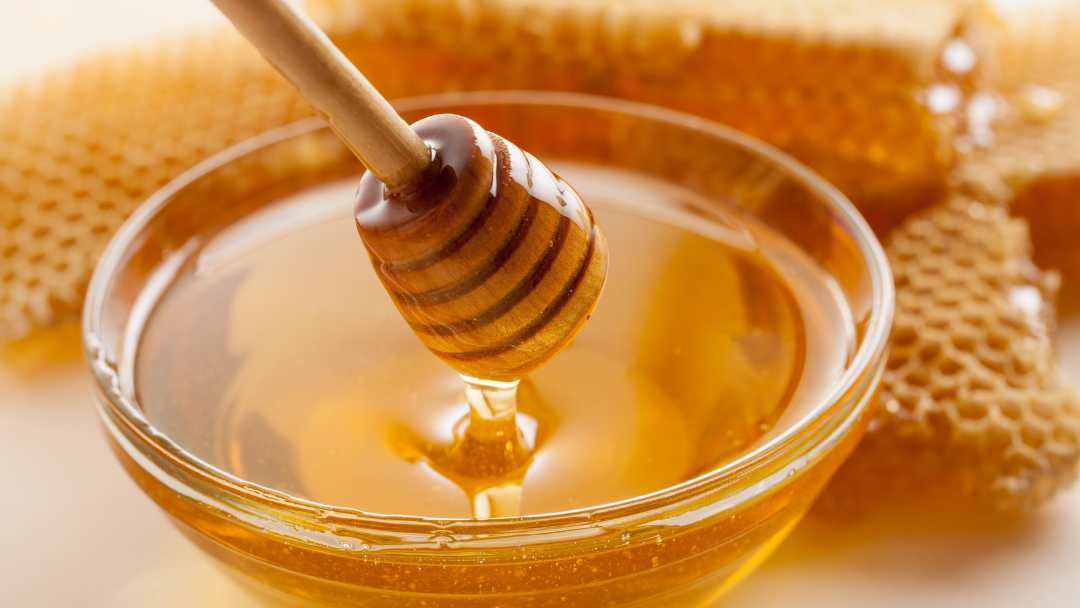
Photo: Billions Photos/Shutterstock.com
I wrote a blog a few years ago about some of the benefits of honey, and with more research available on the subject, I wanted to expand on the article and share some more health benefits of honey.
Although its traditional medicinal use dates back thousands of years, honey has only recently been studied for its potential use in modern medicine. It is a complex substance containing more than 200 components, including vitamins, amino acids, minerals, enzymes, antioxidants, sugar, and water.
In general terms, the properties of honey that positively impact our health include:
The flower source of honey impacts its makeup and, therefore, its effects. While various types of honey are used in the literature, the two most studied are manuka and tualang, which are explored below.
Manuka Honey
One honey with which you may already be familiar is manuka honey. This monofloral honey comes from the manuka tree (also known as tea tree) native to New Zealand and eastern Australia. The manuka tree and its honey have long been used traditionally for medicinal purposes, and recent research has begun to verify many of these benefits.
When shopping for manuka honey, you may notice a designation on the package: UMF or MGO. UMF is the Unique Manuka Factor, and it details the concentration of methylglyoxal or MGO, which theoretically correlates to the antimicrobial capacity, although one study did find that UMF grades did not correlate with antibacterial efficacy in vitro. Generally, the UMF numbers positively correlate to MGO as follows: UMF 5+ equates to greater than or equal to 83 mg/kg MGO, UMF 10+ equates to greater than or equal to 263 mg/kg MGO, and UMF 15+ equates to greater than or equal to 514 mg/kg MGO. As the designations go higher, so does the concentration of MGO. Some brands use the MGO designation rather than the UMF equivalent.
One in vitro study found that, even at low concentrations (8 to 12 percent), manuka honey by itself could inhibit Staphylococcus pseudintermedius, which is antibiotic-resistant. At higher concentrations (greater than or equal to 30%), manuka honey could also disrupt the biofilm and reduce the biomass of the bacteria. Combined with antibiotics, manuka honey increased the efficacy of the treatment. While this pathogen mainly infects animals such as dogs, it can pass to humans. Other in vitro studies have also found manuka honey effective alone or in combination with antibiotics against Ureaplasma spp., Pseudomonas and Burkholderia bacteria, Staphylococcus aureus, and Clostridium difficile, including its biofilm.
An ex vivo study highlighted the potential for manuka honey to combat Pseudomonas aeruginosa, a common infection-causing pathogen common in those with cystic fibrosis. This pathogen has limited effective treatments due to its biofilm formation and increased antimicrobial tolerance. Using manuka honey with 12+ UMF with concentrations at 64 percent led to a complete inhibition of the pathogen. A combination of manuka honey and antibiotics were also effective. However, the researchers commented that this concentration level may be difficult to make into a solution to reach the lungs, although a sinus rinse may prevent the pathogen to get into the upper airways.
Based on some animal studies, manuka honey may also benefit gut health. One animal study found that manuka honey’s anti-inflammatory and antioxidant properties aided in healing gastric ulcers and preserved the glycoproteins when taking 2.5 gm/kg body weight. A rat study found that consuming 5 g/kg and 10 g/kg body weight of manuka honey benefited colitis by reducing colonic inflammation and restoring lipid peroxidation.
Its anti-inflammatory and antioxidant properties may also benefit brain health. In another animal model study, manuka honey inhibited cerebral vasospasm development. There was an inhibition of inflammatory cytokines including TNF-alpha, IL-1 beta, IL-6, and lipid peroxidation.
Human studies are more applicable to potential real-world uses. One prospective, single-blind, randomized controlled trial on the effect of sinus irrigation using manuka honey on patients with active chronic rhinosinusitis found it was significantly better than no treatment, but not statistically significantly different compared to a saline sinus irrigation. In patients on oral steroids or antibiotics, the culture negativity was slightly better with manuka honey compared to a saline solution, but it did not reach statistical significance. For those not on oral steroids or antibiotics, the culture negativity did reach statistical significance with manuka honey. Therefore, using manuka honey was better than no treatment and slightly better than a saline solution.
In a randomized split-mouth control study, manuka honey applied before sutures after surgical extraction of impacted lower third molars compared to nothing applied led to significantly lower pain using visual analog scores as well as leading to a reduction in pain medication.
In human studies, manuka honey has also been found beneficial for dry eye due to meibomian gland dysfunction, wound healing, and oral mucositis.
Tualang Honey
While manuka honey may have the reputation, tualang honey is quickly increasing the number of studies on its potential medicinal uses. This multifloral jungle honey comes from Malaysia, is produced by the rock bees who live in the tualang tree and has a long tradition of medical uses. It may have greater phenolic content and antioxidant properties than other kinds of honeys.
Similar to manuka honey, studies have demonstrated tualang honey’s antibacterial properties, at least in vitro. One study on Malaysian varieties of honey found that both tualang and gelam honey inhibited the growth of a variety of bacterial species including Staphylococcus aureus, Staphylococcus epidermidis, Enterococcus faecium, Escherichia coli, Salmonella enterica, and Klebsiella pneumoniae. Another study similarly found gelam and tualang honey, as well as kelulut honey, displayed a high level of antibacterial properties against several of the same bacterial species.
As with manuka honey, many of the studies are mechanistic and/or animal studies. In an animal study on rats, tualang honey protected the ovaries from cadmium-induced harm. The rats consuming the honey (200 mg/kg body weight followed by 5 mg/kg body weight of cadmium for six weeks) had reduced abnormalities and normal levels of gonadotropin hormones, as well as better markers of oxidative balance, compared to the rats exposed to just the cadmium.
Tualang honey may also protect against damage due to BPA toxicity. One rat study found 200 mg/kg body weight daily protected the ovaries from BPA toxicity. The rats treated with the honey had a more normal estrous cycle and lower numbers of atretic follicles compared to the positive control group. Another rat study found 200 mg/kg body weight protective to the uterus, with the rats treated with the tualang honey experiencing improved abnormalities in the uterine, reduction of lipid peroxidation, and a normalized expression and distribution of ER-alpha, ER-beta, and C3 (a compound involved in innate immunity) compared to the controls.
Honey may also protect against stress-induced problems. In a rat study, 200 mg/kg body weight of tualang honey per day for 28 days mitigated the impact of noise stress on the brain, which generally included increased oxidative stress and lower memory performance. The group supplementing with tualang honey had improved memory, decreased oxidative stress, increased BDNF, decreased acetylcholinesterase, and enhanced neuronal proliferation in certain areas of the brain, meaning it protected against memory decline. In another rat study, treatment with tualang honey mitigated negative impacts of prenatal stress on the offspring, including nociceptive behaviors, oxidative stress, and neuronal damage in the spinal cord.
Animal studies also demonstrate the potential for tualang honey to be cardioprotective, beneficial for bone health, protective to the skin from UV damage, beneficial to the brain including for anxiety and depression.
There are several promising human studies as well. In a small cross-sectional study in 80 people with a schizophrenia diagnosis, those who supplemented with tualang honey for eight weeks displayed improved learning performance in the immediate memory domains, although there was no improvement with long term memory or delayed recall.
In an open-label randomized clinical trial on 40 post-chemotherapy and/or radiotherapy for head and neck cancer, patients took either 20 mg tualang honey or 100 mg vitamin C for 8 weeks. The group taking the honey had significantly improved fatigue and quality of life, although there were no significant improvements in markers such as the white cell count and C-reactive protein.
In one study, combining 20 grams of tualang honey with 1 mg of anastrozole daily for treating breast cancer led to 41.7 percent of the group demonstrating a decrease in background parenchymal enhancement (BPE), a marker for breast cancer risk predictions and treatment response, compared to 10 percent in the group on anastrozole alone. However, this study was small with just 22 total participants.
In a randomized, controlled, open-label study, participants with treatment naïve HIV patients with CD4 counts between 250 and 600 cell/mL (decreased immunity) took either 20 g daily of tualang honey once, twice, or three times a day or a control for six months. All groups experienced a reduction in their CD4 absolute counts (meaning their immunity continued to get worse); however, the medium and high dose groups had a non-significant reduction. There was also a significant improvement in the quality of life, both physical and psychological, in the groups taking the honey. There was also a trend for decreasing viral load.
In a small, single-blind, randomized control trial in 34 patients with chronic obstructive pulmonary disease, those who took 20 mg a day of tualang honey for six months had improved quality of life scores in the mid and long term compared to the standard care group.
Tualang honey may also benefit hormonal health in men and women. In a randomized controlled trial, 20 grams per day of tualang honey was comparable to 750 mg of Tribestan in improving sperm parameters, erectile function, and hormonal profiles in oligospermic males.
In a study on postmenopausal women, 20 mg/day of tualang honey led to an improvement in immediate memory, and performance was comparable to receiving estrogen and progestin therapy; however, the group taking the honey did not experience benefits to their immediate memory after the interference and delayed recall.
In a randomized, double-blind, two-armed parallel study on postmenopausal women, the group taking 20 grams a day of tualang honey experienced a significant decrease in their diastolic blood pressure and fasting blood sugar. The other treatment group was 20 grams a day of a Honey Cocktail which included honey, beebread, and royal jelly. The Honey Cocktail experienced benefits as well, including maintaining BMI, but the effects on blood pressure and blood sugar were greater in the tualang honey group.
Adding tualang honey to antibiotics after tonsillectomy can help reduce the pain, according to one study in which 100 percent of the patients in the antibiotic plus honey group experienced no pain, although the results did not reach statistical significance. Another open-label prospective clinical trial likewise found the benefit of tualang honey on child tonsillectomy patients. The treatment group received 3 ml of tualang honey intraoperatively as well as taking 4 ml three times daily for one week along with Sultamicillin. The control group took just the antibiotic. Those who had the tualang honey experienced faster wound healing.
In summary, the studies on tualang honey focus on many diverse aspects of health, from brain health to hormonal health to preventative health to treatment for acute situations. In this article, I have cited more human studies using tualang compared to manuka honey. This is based on a variety of reasons, including what I found in the literature as well as not repeating what I wrote in my previous article. However, this does not mean that I think tualang is better than manuka honey or other types of honey. Researchers have investigated other types of honey.
Comparing Honey
There are few studies comparing types of honey, especially in human clinical trials. One in vitro study comparing the antimicrobial properties of manuka and tualang honey found them comparable, with the effect and potential superiority depending on the species of the bacteria. Another in vitro study compared manuka honey to Dabur honey on Lactobacillus and Streptococcus mutans and found manuka honey displayed more antibacterial activity.
One animal model study compared manuka honey with acacia honey on wound healing in diabetic and non-diabetic rats. The rats treated with manuka honey experienced significantly faster wound healing, with more than 80 percent wound contraction by day 9 and complete healing two days faster. While both types honey worked better than non-honey, the manuka was more effective.
Although manuka and tualang honey are some of the top types of specific honey being reviewed, they are not the only ones with antibacterial properties. One in vitro study found antibacterial properties in 21 different honey types coming from Mount Olympus, and another study found potential antibacterial benefits from Danish honeys.
Thus, while some honey may outperform others in certain situations, there likely remain similar benefits across many different types of honey. More studies are necessary to ascertain the best honey for different health benefits and situations.
Studies Using Other Types of Honey
While manuka and tualang honey are currently some of the more widely studied kinds of honey, let’s take a look at some studies that either did not specify the type of honey, used different types of honey, or are systematic reviews with multiple types of honey combined.
Oral Hygiene
Many studies look at the use of honey for oral hygiene and treatment, especially for oral mucositis.
A network meta-analysis looking at the effects of nine oral care solutions for preventing oral mucositis (OM) including chlorhexidine, benzydamine, honey, curcumin, povidone-iodine, sucralfate, allopurinol, GM-CSF, and aloe found that chlorhexidine, benzydamine, honey, and curcumin were all more effective than placebo, and honey and curcumin were also more effective than povidone-iodine. A systematic review with the purpose to update the clinical practice guidelines for oral mucositis found sufficient data to suggest that the combined topical and systemic delivery of honey could prevent OM in head and neck cancer patients who were undergoing radiation with or without chemo.
Another systematic review on honey for managing oral mucositis found trials that used conventional honey were beneficial, while there were no benefits to using manuka honey. Another study found that using honey mouthwash for four weeks led to a decrease in mucositis severity, while the control group (no treatment) had an increase in severity. One study looked specifically at thyme honey and found that it also effectively improved the management of OM and quality of life.
One randomized, controlled, double-blind trial on using honey to treat recurrent aphthous ulceration, a common mucosal disorder with no curative treatment, found that applying honey led to a statistically significant improvement in the number of painful days, ulcer size, and erythema compared to treating with topical corticosteroid and Orabase.
In children between two and eight years of age with primary herpetic gingivostomatitis, honey plus acyclovir led to the disappearance of herpetic oral lesions significantly earlier than acyclovir alone (3 days compared to 6 days). Drooling, pain, and eating difficulty also significantly improved.
In one randomized control trial, kanuka honey had no difference in treatment to 5 percent acyclovir in herpes simplex labialis; the honey had the same efficacy as the typical treatment.
Other Health Benefits
Here are some of honey’s other health benefits currently under investigation that I did not discuss in my previous blog post.
A single-blind, randomized trial found that a polysaccharide-resin-honey based cough syrup worked better than one using carbocysteine for acute coughs in children. One double-blind, randomized controlled trial compared honey with coffee (a jam-like paste consisting of 500 grams of honey with 70 grams of instant coffee) to prednisolone (320 mg) and guaifenesin (used as the control group) in persistent post-infectious cough and found the coffee and honey combination to be the most effective treatment.
One randomized crossover clinical trial found that honey worked similarly on pain in women with primary dysmenorrhea as mefenamic acid capsules, and as it has a lower risk of adverse effects, the researchers pointed to its treatment potential.
Furthermore, in a cross-sectional study using data from a larger prospective cohort study on adults in Tianjin, China, there was an inverse association between non-alcoholic fatty liver disease (NAFLD) and consuming honey 2-6 times a week (OR 0.86) compared to one or fewer days per week, although there was no association between consuming honey more than once per day (1.10 OR) and NAFLD. They used a food frequency questionnaire and did not differentiate between the types of honey consumed.
One pilot study found that medical-grade honey added to cow’s milk formula provided beneficial prebiotic qualities to help decrease the growth of Enterobacteriaceae, especially in quantities of 5 grams and 10 grams per day, and increase colonization of Bifidobacterium bifidum and lactobacilli in preterm infants, especially in 10 and 15 grams per day. The infants also experienced increased growth.
In a randomized controlled clinical trial, using a Nigella sativa L. honey formulation for eight weeks significantly improved functional dyspepsia compared to a placebo.
Research shows that there are many potential health benefits to honey, whether consuming it as part of one’s daily eating, taking it as a supplement, or using it topically for wound care. However, more research is needed to elucidate the best honey to use for specific purposes and its medicinal use. In the meantime, talk to your doctor, dietician, nutritionist, or another person on your healthcare team about the best way to incorporate honey to benefit your health.